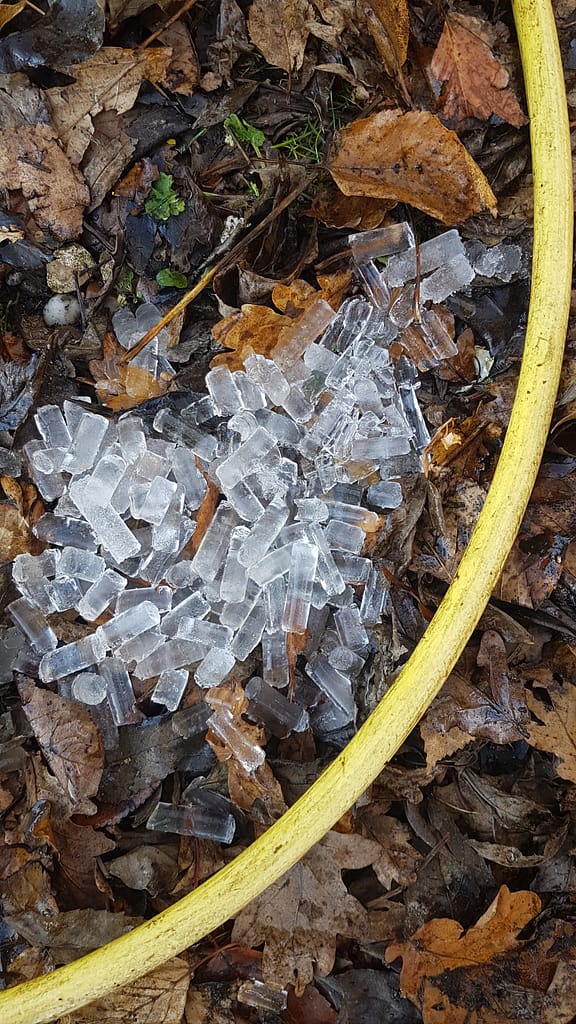
Has winter brought you pond problems? Read this guide to find a solution.
A well designed pond can bring you pleasure all year around, including the winter freeze. Each season can present pond owners with issues that need a solution. Read on to learn about potential frozen pond problems and tips on how to avoid, prevent and resolve them.
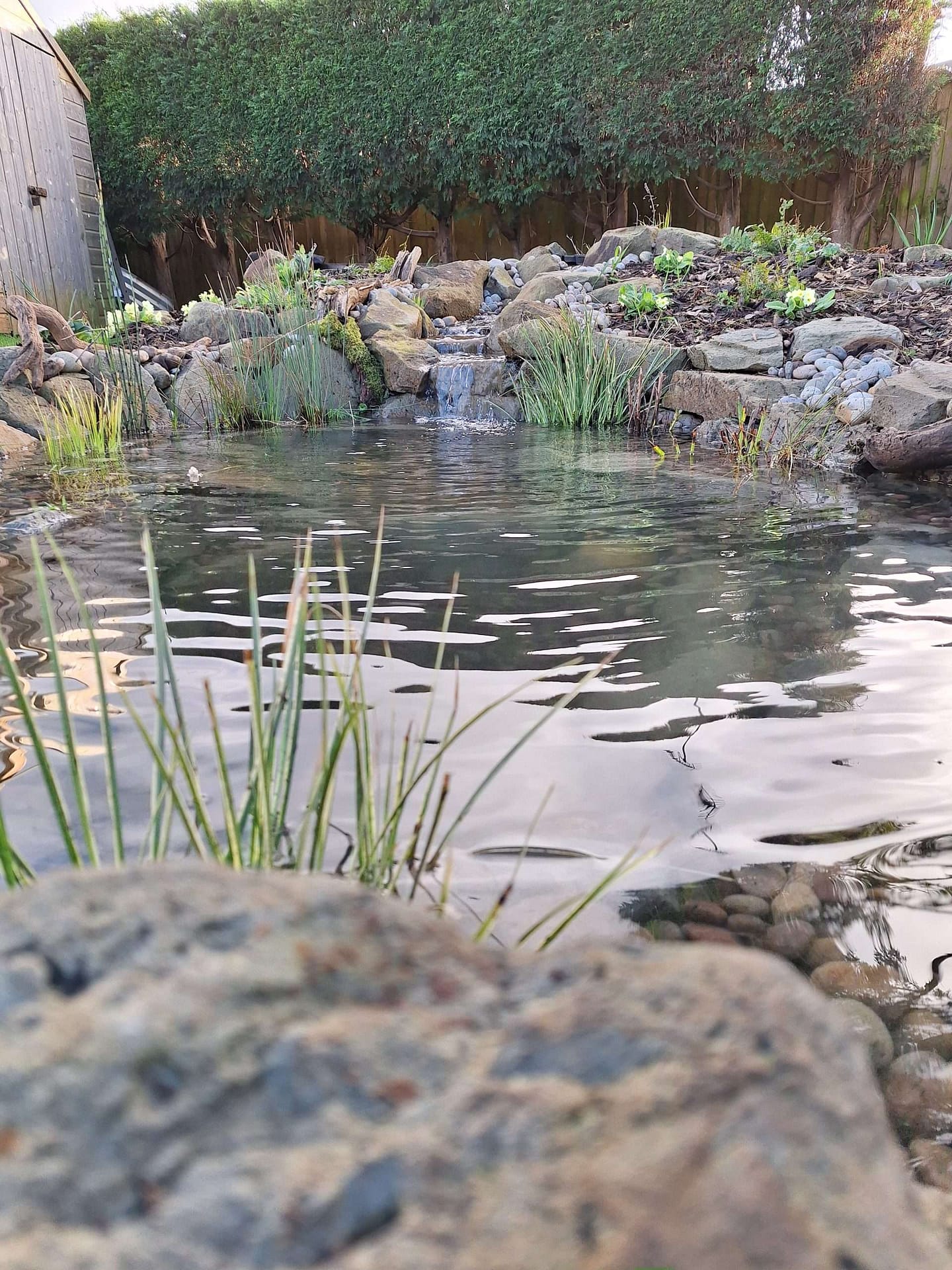
Frozen Pond surface:
How can you prevent the issues associated with an iced over pond? Gas exchange is the main issue here. When a pond is fully frozen the ice layer prevents the removal of harmful gases and toxins. Here is a list of some common solutions with and without pond technology. Smashing ice is not advised as it creates damaging shock waves below the surface. Try one or more of these tips to resolve your frozen pond problems.
Stop your pond freezing or make a hole in the ice:
- Bobbing ball: an age old and simple solution that many try is the floating ball. A ball is placed on the pond surface with the expectation that the moving ball (via wind or turbulence) will keep an area clear of ice. Results are varied.
- Hot Pot: this method is great for de-icing an area of the pond. Simply take a hot pot of hot water and gently place it on the ice, allowing it to slowly melt and clear an area.
- Hot Water: gently pour warm/hot water over an area or around an area to melt or loosen a piece of ice for removal.
- Moving water: If you have a waterfall, jets, fountainscapes or water features then you can try this method. All you have to do is leave it on; moving water rarely freezes, so keep it going to ensure an ice free area of open water. There is the added bonus of ice sculpture effects from semi frozen features, keep an eye out for water loss as a result of icing.
- Pond Heater: You can purchase a pond heater or have us supply and fit one to be sure your pond won’t ice over. The heater will float at the surface keeping a hole free for gas exchange.
Frozen fish & wildlife casualties:
Gas exchange is the name of the game. If your pond freezes the ice forms a barrier to the removal of toxic and harmful gases and the uptake of beneficial oxygen.
Pond temperatures explained:
When water gets colder, as with air, it sinks lower. Unlike air, when it reaches a cold enough temperature it starts to rise and forms ice at the surface. This ice forms an insulating layer keeping the water underneath warmer as a result.
A pump on the bottom of the pond can cause the temperature of the water to drop as it mixes the colder and warmer water together. Lifting your pond pump or using a skimmer can prevent this issue, helping to keep the water warmer at the bottom.
Fish over-wintering:
You will notice your fish becoming slower and more sedentary as the water temperature drops in winter. Unlike humans, fish are ‘ectotherms’ meaning that their body temperature matches the water temperature so as it cools they slow down. At these times they will usually stick to the bottom of the pond where it is relatively warmer and safer for them. Cease feeding once the temperature is consistently below 10°C to prevent gut issues as the fishes digestive system is running very slowly. Winter feeds are available if you are keen to continue but exercise caution.
Some enthusiasts use pond heaters or exchangers to maintain a higher water temperature in colder months. Watch fish as the temperature rises again coming in to spring as this is a common time for parasites and diseases to get a head start.
Wildlife pond cleaning & clearance:
Winter is considered a good time to undertake full or partial cleaning and clearance. It minimises the potential to damage habitat and helps maintain populations. Many aquatic organisms are hibernating out of the pond or in the sediment on the bottom at this time.
Causes of water loss – Winter:
It can be difficult to determine the cause of a water loss in winter. The additional precipitation can mask a leak. It is also unlikely to be evaporation at this wetter and colder time of year. A common cause can be ice barriers. An ice barrier (like a debris barrier) can push water levels up and over the edges of waterfalls. It can partially obsure and redirect fountains and water features. Low quality pipes can become brittle in cold temperatures and crack or split causing drastic water loss. If your pump is on the bottom, lifting it up in the water column can prevent total pond emptying and the dire consequences. Designing a pond with a skimmer can prevent this issue as the pump is separated from the bond body. Filter system leaks can be caused by freezing water disrupting or damaging components and causing overtopping.
Damaged/malfunctioning kit?
Pond pumps are designed with an optimum operational temperature range. Some pumps will cease to function and may be destroyed if left in freezing water to ‘ice up’. This can be avoided by keeping the pump under water and running where it is warmer or remove the pump, clean it and then store it inside. Check the user guide/manual for your pump.
Filter systems can malfunction over winter as changes in temperature can cause expansion and contraction of joints, gaskets and seals. Freezing within a filter can cause overtopping, and damage components. Ultraviolet light units (UV or UVC) can be damaged by freezing water. The fragile internal quartz sleeve can break, therefore it must be kept on or drained completely to prevent this.
Plumbing: Pipes, fittings and joints can be damaged by expansion and contraction, perishing or freezing during colder months. Assess them regularly, upgrade and protect as required to prevent issues.
Winter plant management:
Most importantly, in winter, any marginal foliage should be cut above the water/ice level to prevent freezing the plant. Consider leaving seed heads on plants such as Purple Lustrife that are in, or close to the pond. Leave cover around the pond and pond area to provide shelter and food for foraging animals. See our post on the 4D’s of aquatic plant maintenance for more information. When tidying other areas of the garden try creating log and/or twig piles as well as compost heaps. They can provide valuable habitat for overwintering wildlife including mammals, amphibians, snakes and insects.
Keep some greener, lusher plants visible over winter, by adding species like Acorus gramineus Ogon or Variegatus. Moss is another good source of colour.
Conclusion:
Winter is just another season to enjoy your pond and its dynamic environment. Artistic ice formations and beautiful vistas are to be enjoyed whilst we anticipate the new spring growth.
Consider adding lighting for additional effects. Coloured lights can be used to bring visual warmth to the water garden. Fire and water features and fountainscapes make a lovely warming element.
If your frozen pond has become an issue or you need help over the winter period please do get in touch here.